
You want to raise awareness, attract donors, and build your brand, but how can you accomplish all of these things and advance your mission when every dollar counts? Fortunately, successful marketing isn’t about how much you spend. It’s about creativity and resourcefulness.
Some of the most effective marketing strategies don’t require a big budget. You can create content to show off your thought leadership or use social media to interact with supporters. Even some paid channels like Google Ads are within reach with the right strategies.
Let’s explore several low-cost and free marketing ideas your nonprofit can use to connect with its audience.
Low-Cost and Free Nonprofit Marketing Ideas
1. Google Ads
Paid advertising isn’t out of reach even with a limited budget. While normally costly, you can advertise on Google for free with the Google Ad Grant.
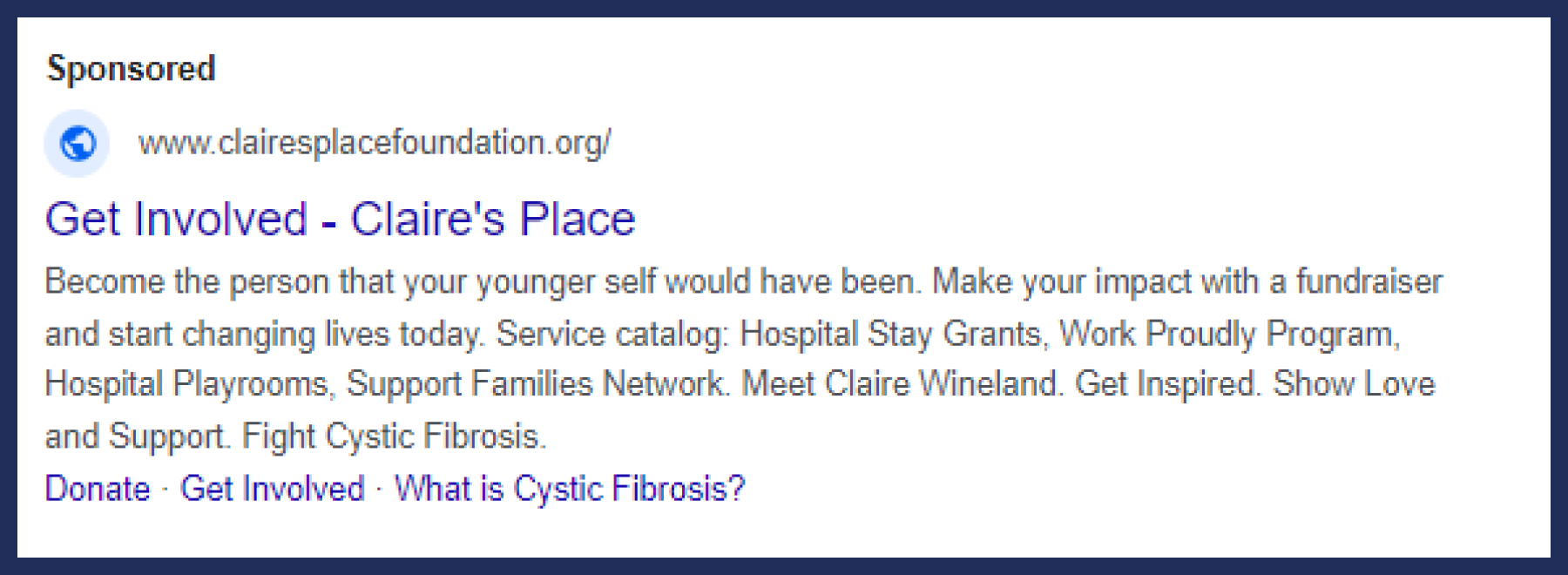
If approved for the grant, your nonprofit will receive up to $10,000 in monthly advertising credits to run search ads for free. Use the grant to drive traffic to key pages on your website, such as your donation form, event pages, or crowdfunding page for a major campaign. For instance, Claire’s Place Foundation, which supports individuals affected by cystic fibrosis, uses the Google Ad Grant to promote ways for supporters to get involved.
To qualify for the Google Ad Grant, you must:
- Be a registered charitable organization in an eligible country.
- Not be a government entity, educational institution, healthcare organization, or hospital.
- Meet the Google Grant website requirements, including having a secure, user-friendly site with original content that highlights your mission.
If you meet these eligibility requirements, we recommend applying for the grant. Double the Donation’s Google Grant application guide explains that you first need a Google for Nonprofits account, which has similar requirements as the Google Ad Grant. Then, the actual application process is super easy. Once approved, you can create ads to connect with Google users interested in your cause.

2. Social Media
Social media platforms like Facebook and Instagram allow nonprofits to connect with their audience, share compelling visuals, tell stories, and keep supporters informed.
Here’s a breakdown of how different platforms help nonprofits grow:
- Facebook is ideal for long-form content, storytelling, and impactful videos and photos. It also offers digital fundraising features like Birthday Fundraisers.
- Instagram is great for sharing images, stories, and videos that highlight your mission. Fundraising features include Donate Stickers for Stories and “Support” buttons on profiles.
- TikTok is a short-form video platform. Share bite-sized content about your mission, relevant issues, and upcoming events by jumping on viral trends and sounds. Getting Attention’s guide to TikTok for nonprofits explains that the platform’s algorithm favors authenticity and engagement rather than follower count, meaning it’s possible for even small organizations to go viral. It also offers Donation Stickers for videos and Donation Links in profile bios and video descriptions. Plus, you can increase engagement with tools like video replies to comments and Stitching or Dueting other posts.
- X (formerly Twitter) is a fast-moving platform for short updates, news, and advocacy. It emphasizes sharing, allowing users to find relevant posts through hashtags and trending topics, and enables real-time conversations with followers through mentions.
Remember that different platforms attract different demographics. Facebook skews toward older generations, while Instagram, TikTok, and X appeal to younger audiences.
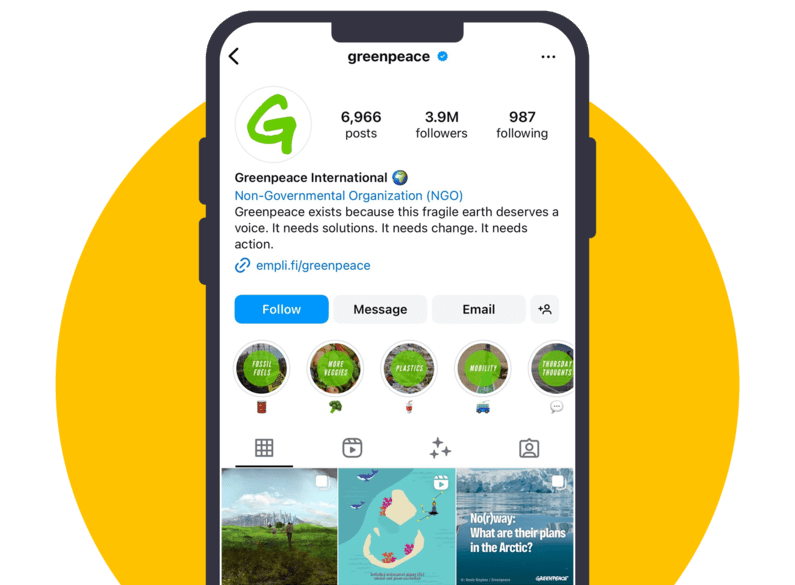
Whichever platforms you choose, ensure your profiles are complete and verified to build trust. For example, take a look at Greenpeace International’s Instagram profile with its blue verification checkmark, informative bio, and links to involvement opportunities:
From here, create a content calendar and engage with followers to grow your online community by posting regularly.
3. Email Marketing
Email marketing offers a direct way to nurture your nonprofit’s relationships and inspire action. To stand out in crowded inboxes, your messages need to be personalized and engaging. Try these tips to cultivate supporter relationships with each email:
- Create compelling subject lines to pique interest, such as “See how your donation changed lives this month!” Brand each email with your official logo, fonts, and brand colors.
- Segment your audience within your nonprofit database to send relevant messages to groups like new donors, recurring contributors, and volunteers.
- Share informative content like beneficiary stories, event announcements, milestone updates, and news articles related to your mission.
- Incorporate fun visuals like photos of your team in action, images of your beneficiaries, and infographics that break down complex data.
- Create automated messages, such as thank-you eCards that automatically send when someone donates, to streamline marketing and save time.
To grow your email subscriber list, encourage sign-ups with compelling calls-to-action on your website. Place eye-catching buttons in high-traffic areas, like your homepage or donation confirmation page, inviting visitors to “Join our community” or “Get updates on how we’re making a difference.” A well-placed CTA can turn casual visitors into dedicated supporters.
4. Content Marketing
Nonprofit content marketing is an excellent way to showcase your thought leadership and the depth of your work. Use your website to publish blog posts and updates that spotlight your impact. Regularly updating content keeps your site fresh, boosts visibility on search engines, and keeps supporters informed about the latest happenings.
You can also expand to other types of content, like videos and podcasts. Video content is particularly powerful for storytelling, so consider creating short videos that show the real-world impact of your programs. Meanwhile, podcasts can feature in-depth discussions about your mission.
Considering covering topics like:
- Success stories from beneficiaries, volunteers, or staff
- Behind-the-scenes looks at your programs
- Explanations of your mission and its impact
- Discussions of news items related to your mission
Focus on stories and educational content that convey the heart of your mission. Get creative and consider what supporters want to know about your work.
For written content, make posts visually engaging using low-cost tools like Canva to create custom blog headers, illustrations, and infographics. These elements break up text and make complex information easier to digest.
While AI can support content creation, be careful with how you use it. Nonprofits can use AI to generate topic ideas, outline posts, brainstorm compelling calls-to-action, and spark ideas for original visuals. However, authenticity is key, and final products should always reflect your nonprofit’s unique, human voice.
5. Volunteer Marketing Support
Ask your volunteers to advocate for your cause by telling others about your work. Word-of-mouth marketing is incredibly powerful, because people trust recommendations from their friends and family.
Encourage volunteers to post about your cause online, or you can get creative with cause awareness eCards. For this approach, create eCards that feature mission-related photos or illustrations. Then, write a pre-set message that explains your cause and encourages recipients to take a specific action, like volunteering, donating, or spreading awareness. Then, ask supporters to send these eCards to their friends and family.
You can also ask volunteers with relevant skills to help out with graphic design, content creation, and social media management. By leveraging volunteers’ skills and passions, you’ll amplify your messages and give volunteers new ways to support your mission.
Marketing on a budget can feel impossible, but it doesn’t have to be! All you need is innovative ideas.
Embracing creativity and leveraging existing resources can lead to powerful results, ultimately driving your mission forward while remaining financially responsible. Test different strategies and discover what resonates best with your audience.

 Donations
 Events
 Petitions
 Forms
Forms Shop
Shop Directories